
System check
Visible operation of valves, lines, heads and controller is reviewed.
Professional field service based in Kartepe
We plan irrigation around the different needs of lawn and planting areas, aiming to reduce dry patches and unnecessary water use.
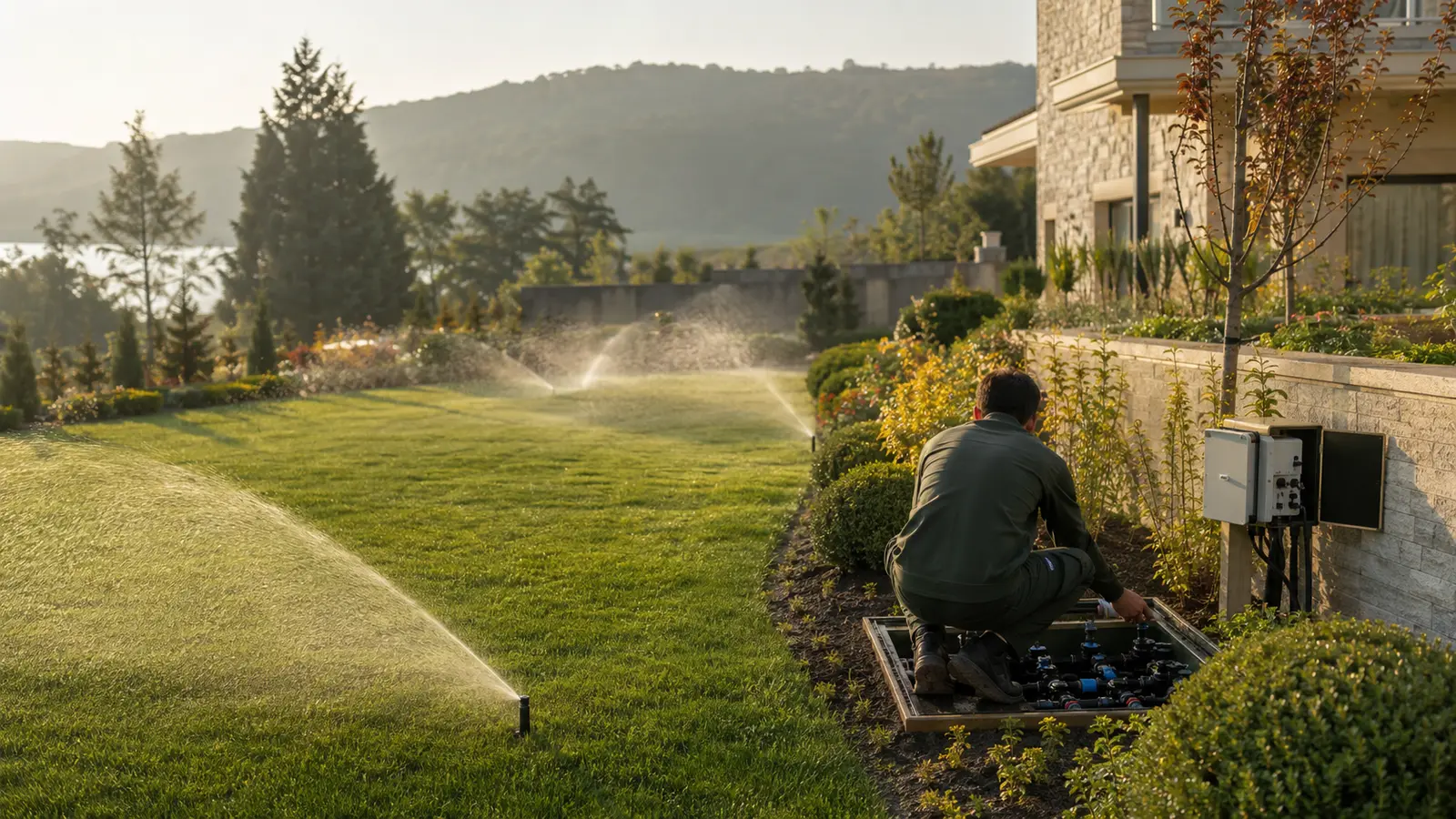
Illustrative service image.
Services
Pressure, head placement, zoning, soil and run time must work together. Placing areas with very different needs on one zone can cause over- or under-watering.
Existing systems are checked for leaks, broken heads, coverage gaps and controller programming. New layouts are divided into zones according to the property and planting plan.
The aim is not to run every zone for the same period, but to apply the appropriate amount at the appropriate time. Settings can be reviewed as seasons change.
01
We plan irrigation around the different needs of lawn and planting areas, aiming to reduce dry patches and unnecessary water use.
Visible operation of valves, lines, heads and controller is reviewed.
Dry and excessively wet areas are identified and head placement assessed.
Days and run times are adjusted for season, soil and planting.
Lines, emitters and filtration for planting beds are considered.
Identified faults are repaired according to scope and parts required.
Phased recommendations address poor zoning or ageing equipment.
02
We note lawn, planting, slope and water-source conditions.
Zones are run to observe pressure, coverage and leakage.
Approved scheduling, care or renewal work is completed.
Basic use and seasonal scheduling notes are provided.
03
Early morning is often appropriate, but timing and duration should reflect the season, soil and system.
Not always. Sound lines and equipment can remain while weak zones or heads are improved.
Correcting leaks, coverage, zoning and timing can reduce waste, depending on site conditions.
Protective measures may be needed where frost is a risk. The system and local conditions should be assessed.
Tell us what the property needs and we will assess the right scope, priorities and visit frequency.