
This article provides general information. Product labels, manufacturer instructions and appropriate personal protection take priority when chemicals, electrical or powered equipment are involved.
The short answer and the right approach
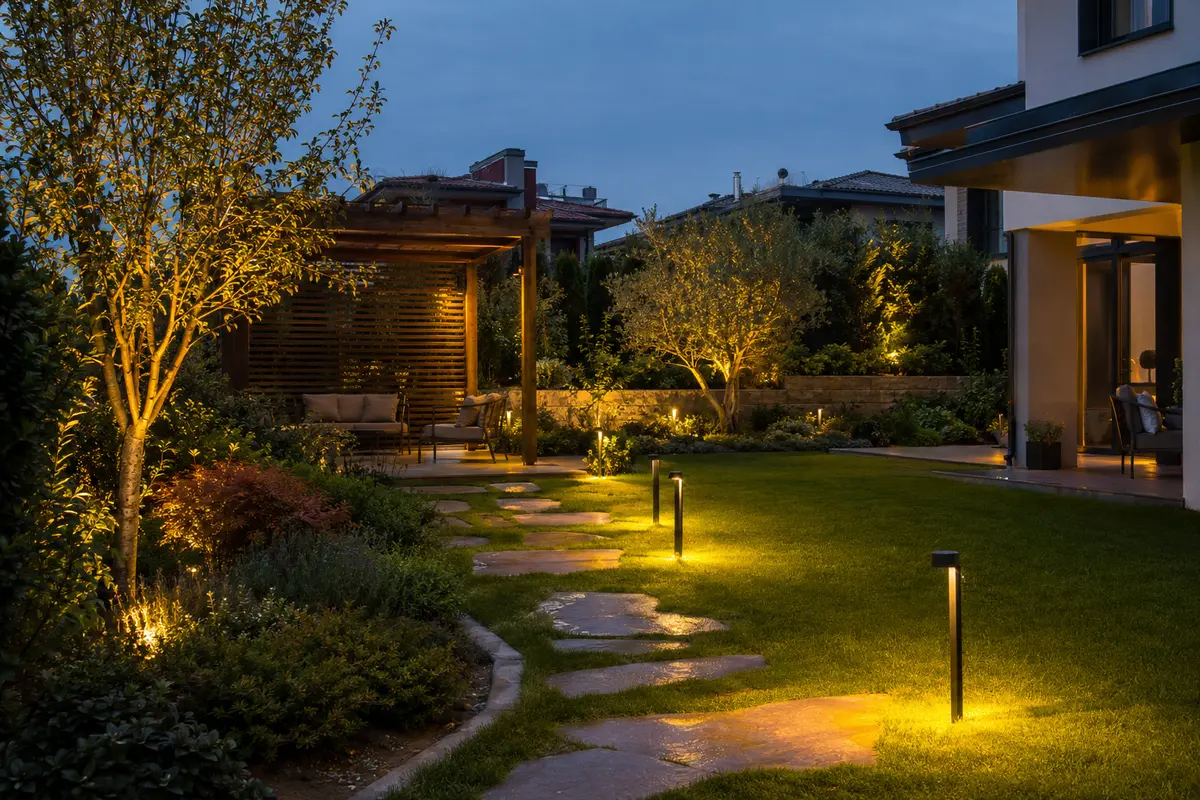
Landscaping plans plants, soil, water, hard surfaces, lighting and use as one outdoor system. Drainage, movement, maintenance and seasonal resilience matter as much as appearance. A lasting result comes from assessing use, equipment and season together instead of reacting to one visible symptom.
Check the current condition first
Begin by reviewing these points together: Who uses the space and when. Sun, shade, slope, wind and drainage. Existing planting, surfaces, irrigation and lighting. This order helps identify the cause rather than temporarily hiding the symptom.
Put the work in the right order
A practical sequence is: Write down needs and problems. Identify elements worth retaining. Resolve planting, surfaces and systems on one plan. Observing the result after each stage reduces unnecessary products, labour and repeated intervention.
Timing and maintenance frequency
Analysis and design should precede installation; planting dates then follow the selected species and local season. A calendar is only a starting point; temperature, rainfall, use and the response of the water or plants should guide adjustments.
Conditions in Kartepe, Sapanca and Kocaeli
Kocaeli's transition climate combines wet periods, hot summer days and meaningful elevation differences. Planting, drainage and surface decisions should follow the property's sun, slope, wind and soil rather than a standard list.
Common mistakes
Treating landscaping as plant shopping, leaving infrastructure until later and ignoring the future maintenance budget are common mistakes. Other risks include acting without measurement, applying the same treatment everywhere and failing to review the outcome.
Measurement, records and follow-up
Record the date, action, quantity, observed value and next check. Short notes and photographs make it easier to distinguish genuine improvement from a temporary visual change.
When professional help is appropriate
Drainage, retaining work, mature trees, electrical routes and major surface changes require informed planning. A measured survey reduces unsuitable planting and unnecessary material costs.
Quick checklist
- Who uses the space and when
- Sun, shade, slope, wind and drainage
- Existing planting, surfaces, irrigation and lighting
- Write down needs and problems
- Identify elements worth retaining
- Resolve planting, surfaces and systems on one plan
Frequently asked questions
Does one standard suit every property?
No. Size, equipment, use, season and current condition should be assessed together.
When should the result be reviewed?
Analysis and design should precede installation; planting dates then follow the selected species and local season. Follow with a suitable measurement or observation after the work.
What is the most common risk?
Treating landscaping as plant shopping, leaving infrastructure until later and ignoring the future maintenance budget are common mistakes.
How can Virea help?
Virea assesses properties in Kartepe, Sapanca, Kocaeli and nearby areas and prepares a clear scope and quotation around the actual need.
A measured, sustainable plan
Landscaping plans plants, soil, water, hard surfaces, lighting and use as one outdoor system. Drainage, movement, maintenance and seasonal resilience matter as much as appearance. Regular observation, correct timing and recorded work produce a manageable and safer result instead of a short-lived visual improvement.